
14
skeletons known, all from the limestone around Solnhofen
3
found on the Langenaltheimer Haardt
1861
the first feather in Solnhofen, the first skeleton in Langenaltheim
2011
the Langenaltheim fossil becomes the neotype
IThe case · all fourteen and the feather
Die Vitrine
The museum case
Every known Archaeopteryx, as a museum would label it. The red dot marks the ones found in Langenaltheim.
IIThe Langenaltheim fossil
03.10.2011
The day it became the neotype
Der Neotypus
In 1861 quarrymen on the Langenaltheimer Haardt split a slab and found the first Archaeopteryx skeleton. It went to Carl Friedrich Häberlein, the Pappenheim district physician - perhaps in payment for treatment - and in 1862 to the British Museum.
Because the name Archaeopteryx had been given to a single feather, scientists asked for a firmer anchor. On 3 October 2011 the International Commission on Zoological Nomenclature made the fossil from Langenaltheim the neotype: the specimen that defines the species.
- The skeleton, 1862£450
- Häberlein's other 1,756 Solnhofen fossils, 1863£250
- Total paid£700
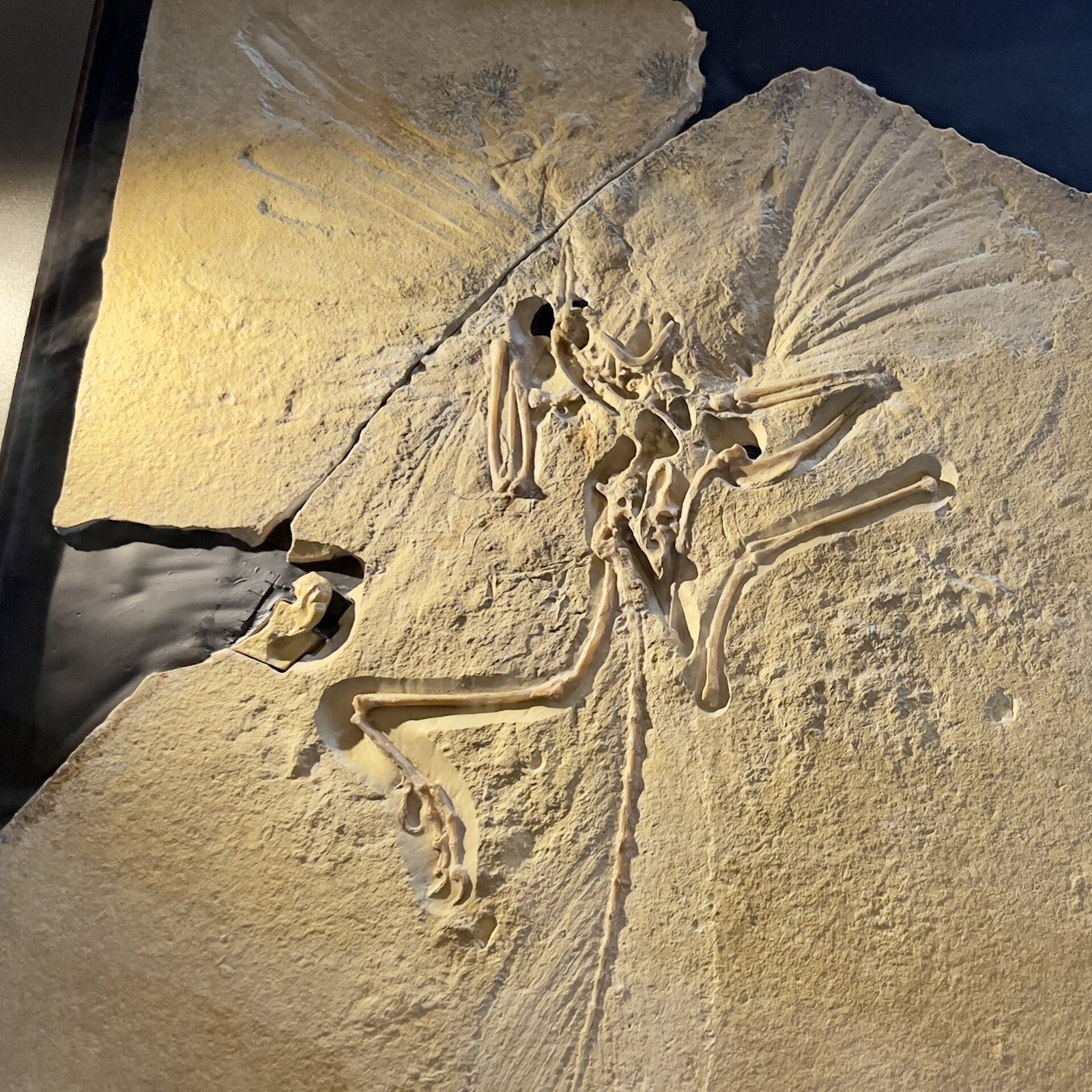
The London specimen - found on the Langenaltheimer Haardt, 1861. Natural History Museum, London.
IIITool · every find since 1855
Fundchronik
The chronicle of finds
Fourteen skeletons and one feather, all from the limestone around Solnhofen. Red dots were found in Langenaltheim, dark ones in Solnhofen. Tap a dot, or press replay.
IVThe specimens
Tafeln
Plates
Real photographs of the fossils and the feather. Read the Fundort line - Langenaltheim keeps turning up.
London specimen
Found: Langenaltheimer Haardt
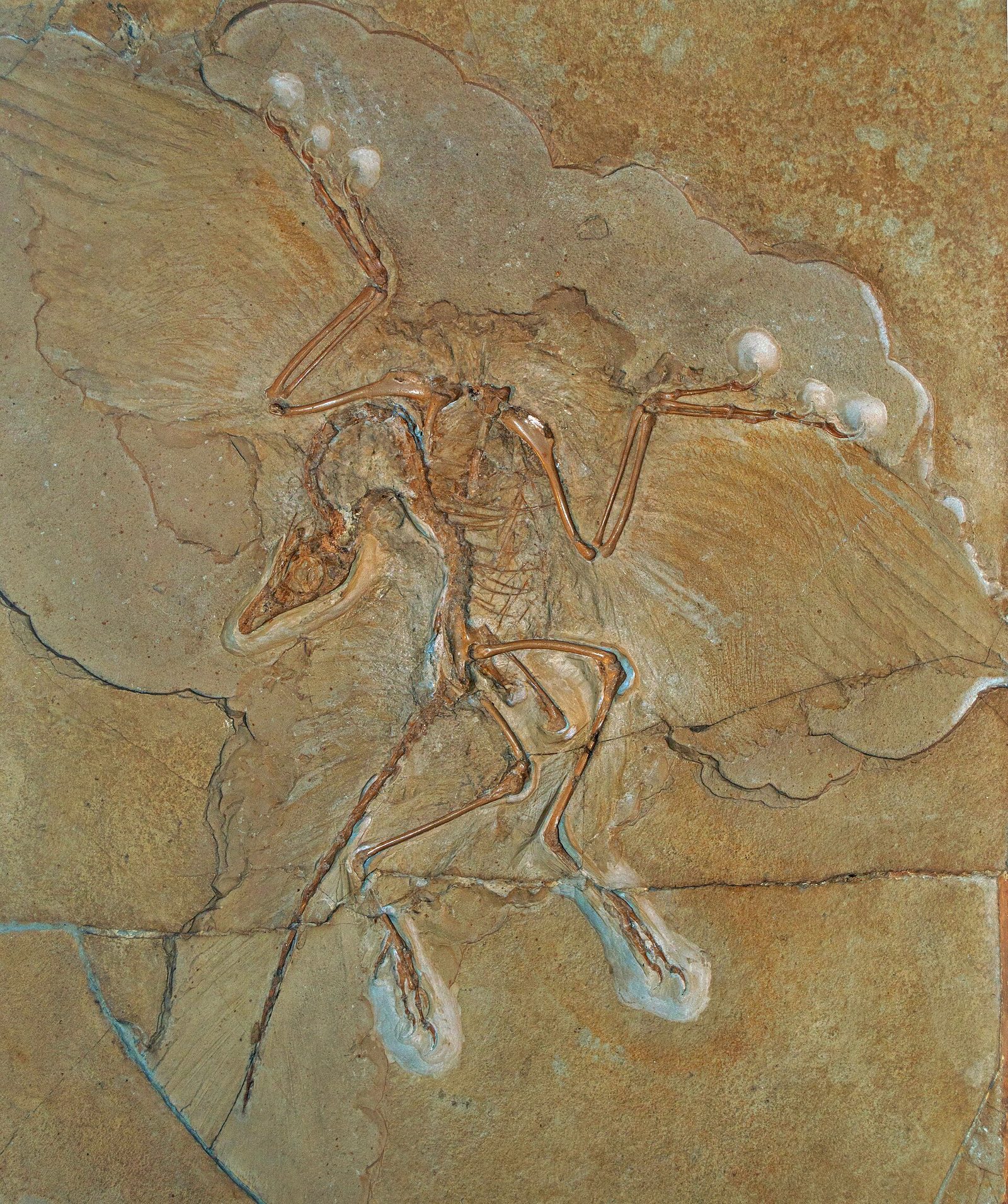
Berlin specimen
Found: Blumenberg near Eichstätt
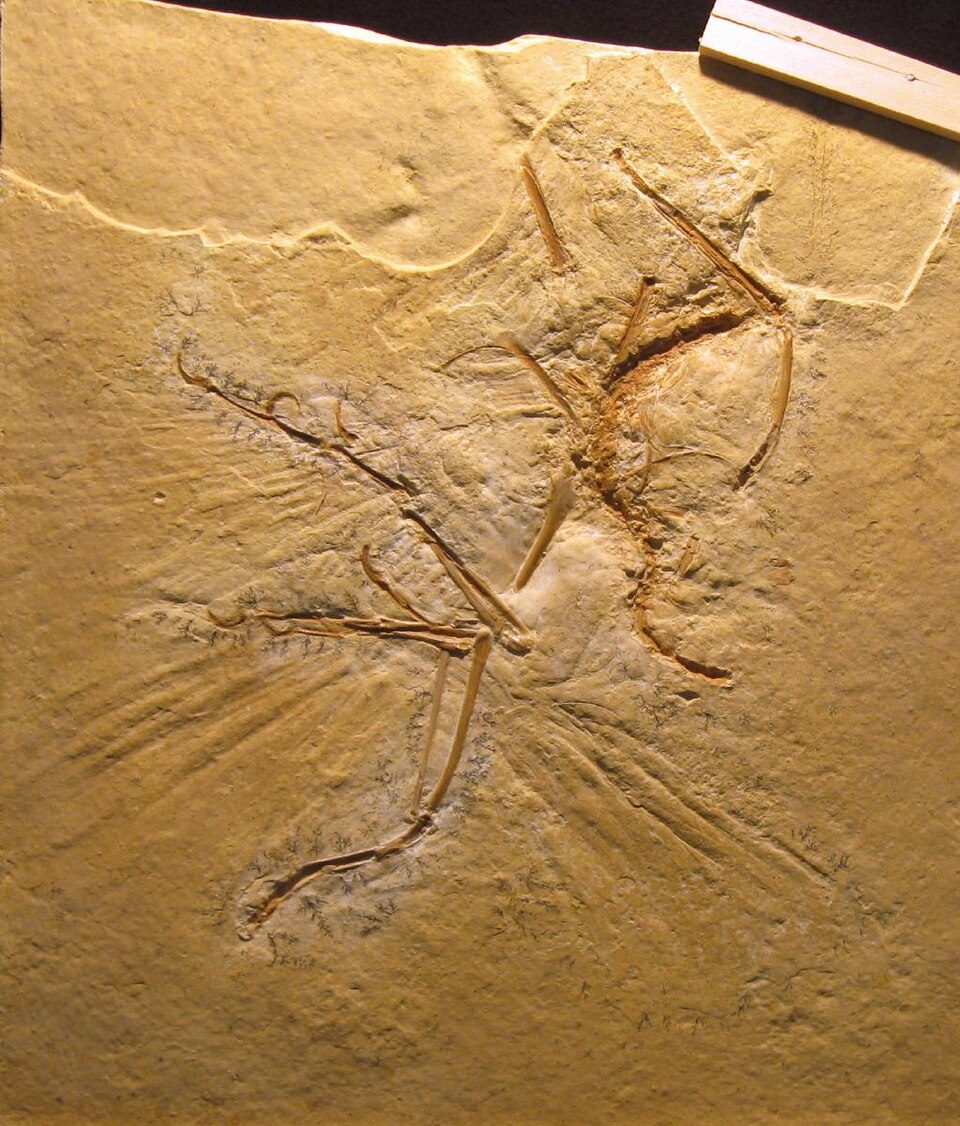
Maxberg specimen
Found: Langenaltheimer Haardt
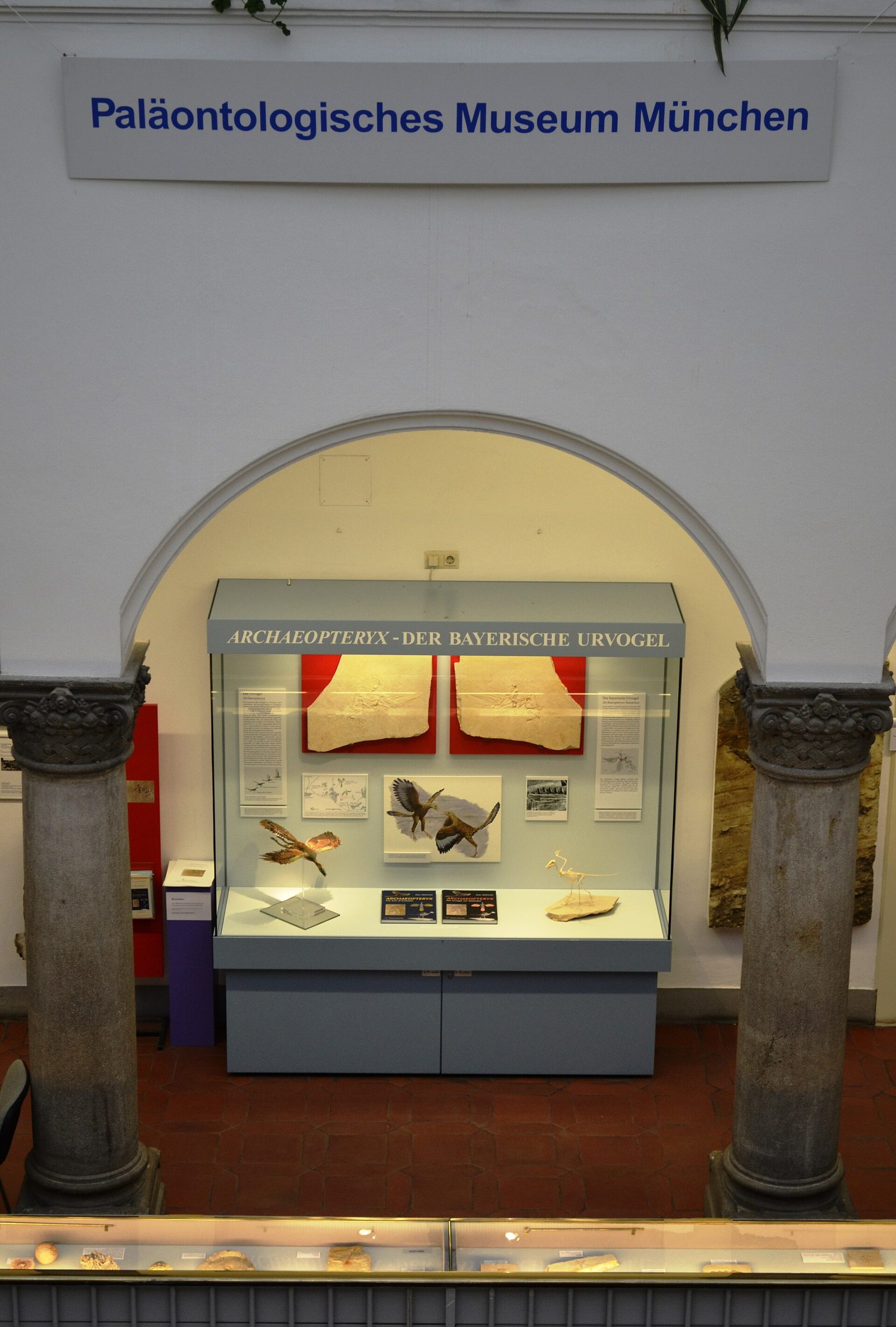
Munich specimen
Found: Langenaltheimer Haardt
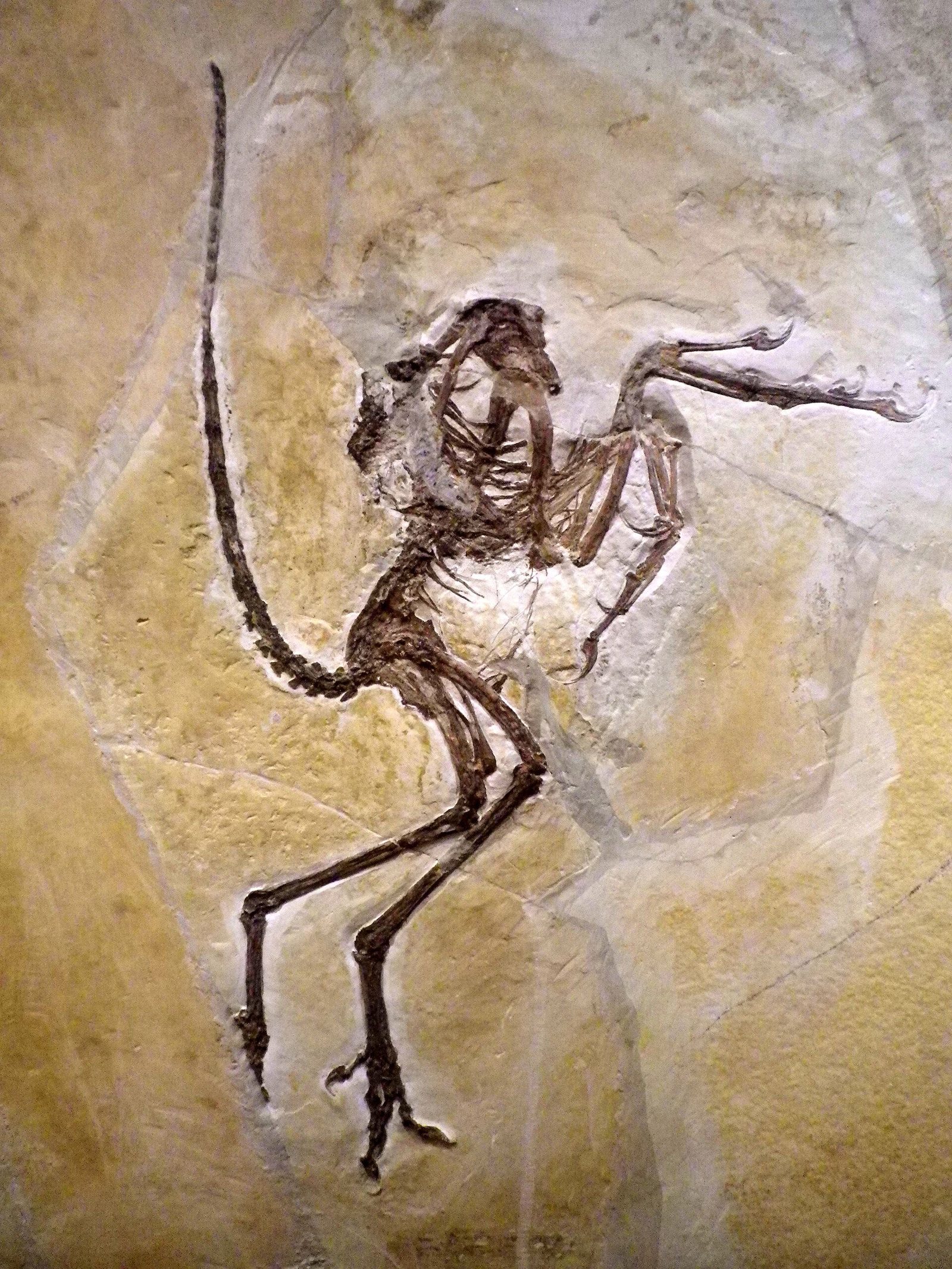
Solnhofen specimen
Found: near Eichstätt
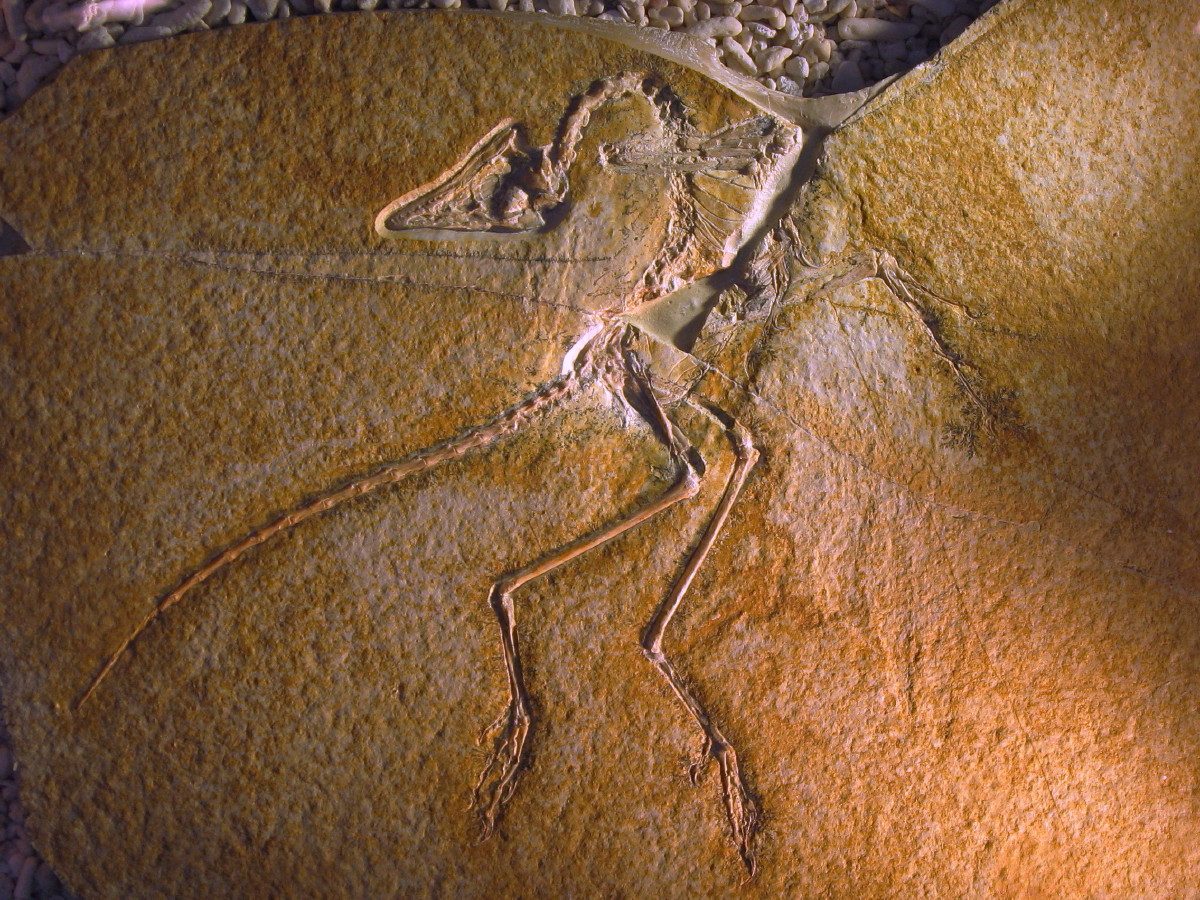
Eichstätt specimen
Found: near Workerszell
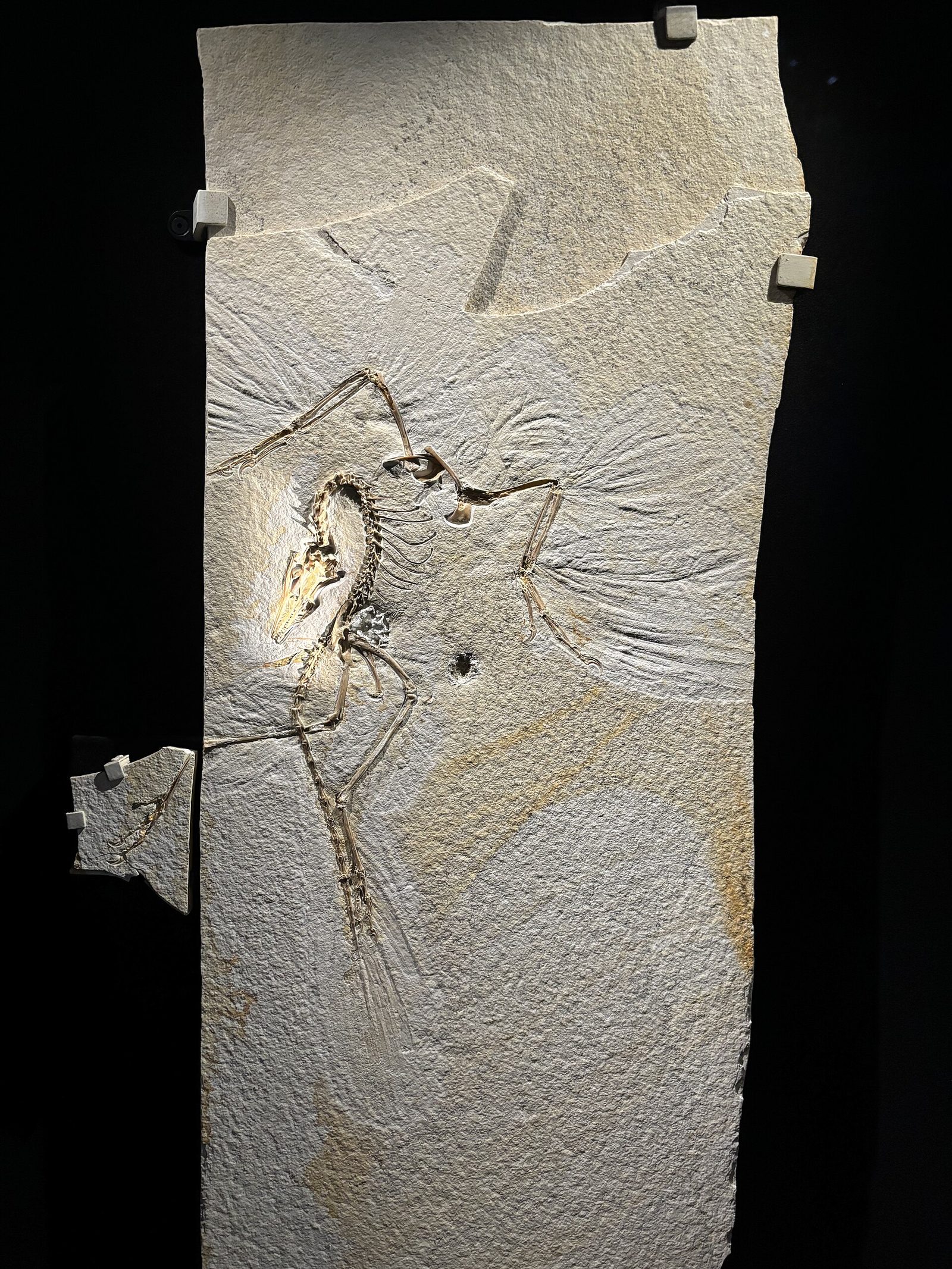
Chicago specimen
Found: Bavaria (Swiss collection since 1990)
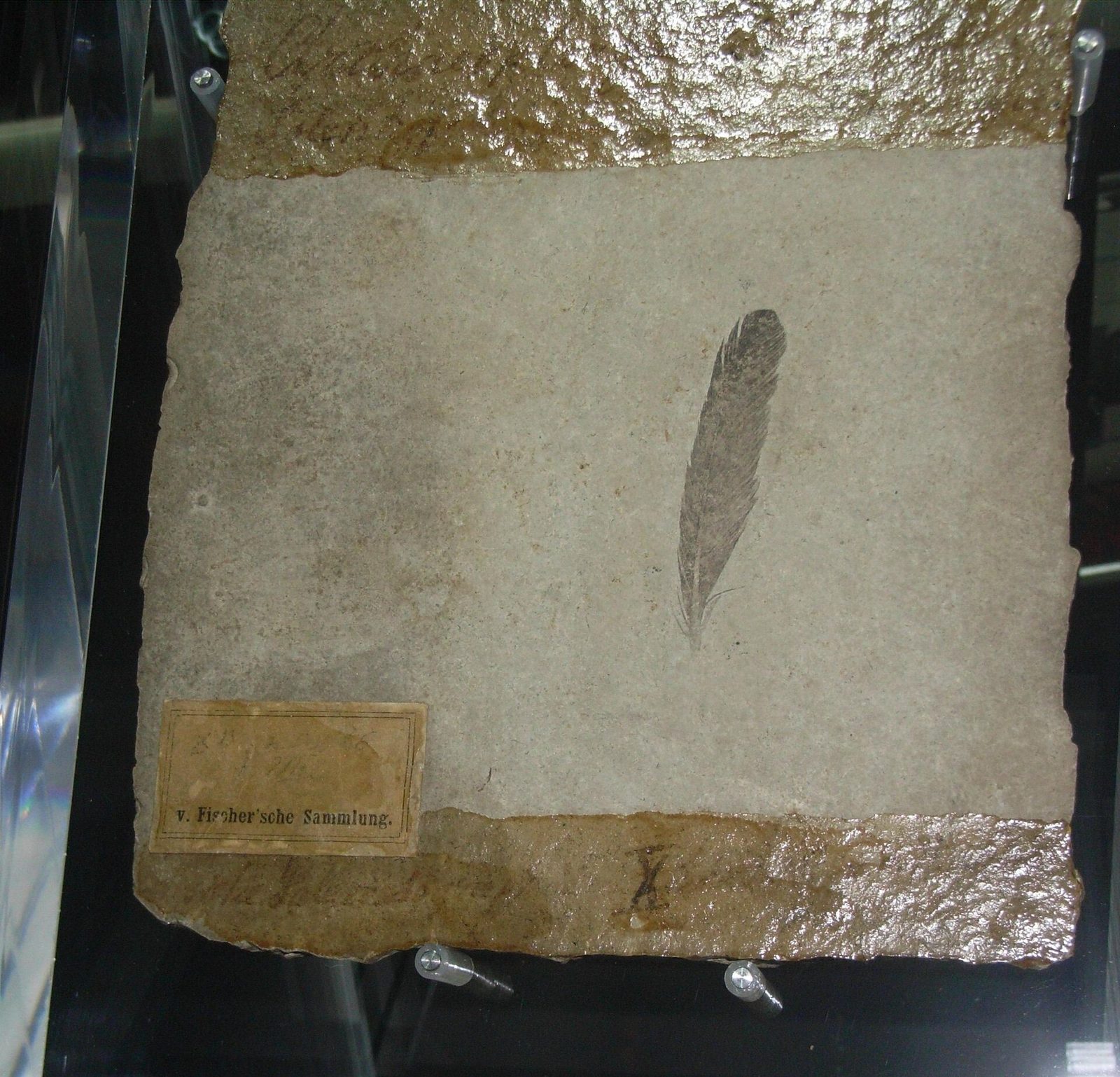
The feather
Found: Solnhofen community quarry
VAll fourteen and the feather
Fundregister
Register of finds
Every Archaeopteryx in one table. Highlighted rows were found in Langenaltheim. "km" is the straight-line distance from Langenaltheim to the find site.
A cast - the original has not been seen since 1991. H. Raab, CC BY-SA 3.0.
VIA Langenaltheim mystery
Das verschwundene Exemplar
The missing specimen
The second Archaeopteryx from the Langenaltheimer Haardt came out of the same quarry as the London specimen, almost a century later. Then it disappeared.
- 1956Quarry workers Ernst Fleisch and Karl Hinterholzinger find it - and take it for a crayfish. It sits in a hut for two years.
- 1959Professor Florian Heller in Erlangen identifies and describes it. The quarry owner, Eduard Opitsch, lends it to the Maxberg Museum in Solnhofen.
- 1974Opitsch takes it back home.
- 1991Opitsch dies. The fossil is not in his house. His headstone in the Langenaltheim cemetery carries a gilded engraving of it - and people say he took it to his grave.
- 1995Germany declares it national cultural heritage. It may not leave the country - wherever it is.
VIITool · read the stone
Lesen Sie den Stein
Read the stone
Drag across the slab. Left: the Berlin specimen as photographed. Right: the same photograph pushed to high contrast so the bones and every feather print stand out.
VIIITwo villages, one quarry
Zwei Dörfer
Two villages
Langenaltheim and Solnhofen sit either side of the Haardt, a plateau of thin, flat limestone that people have quarried for centuries. Split one of those slabs and, very rarely, a 150-million-year-old animal looks back.
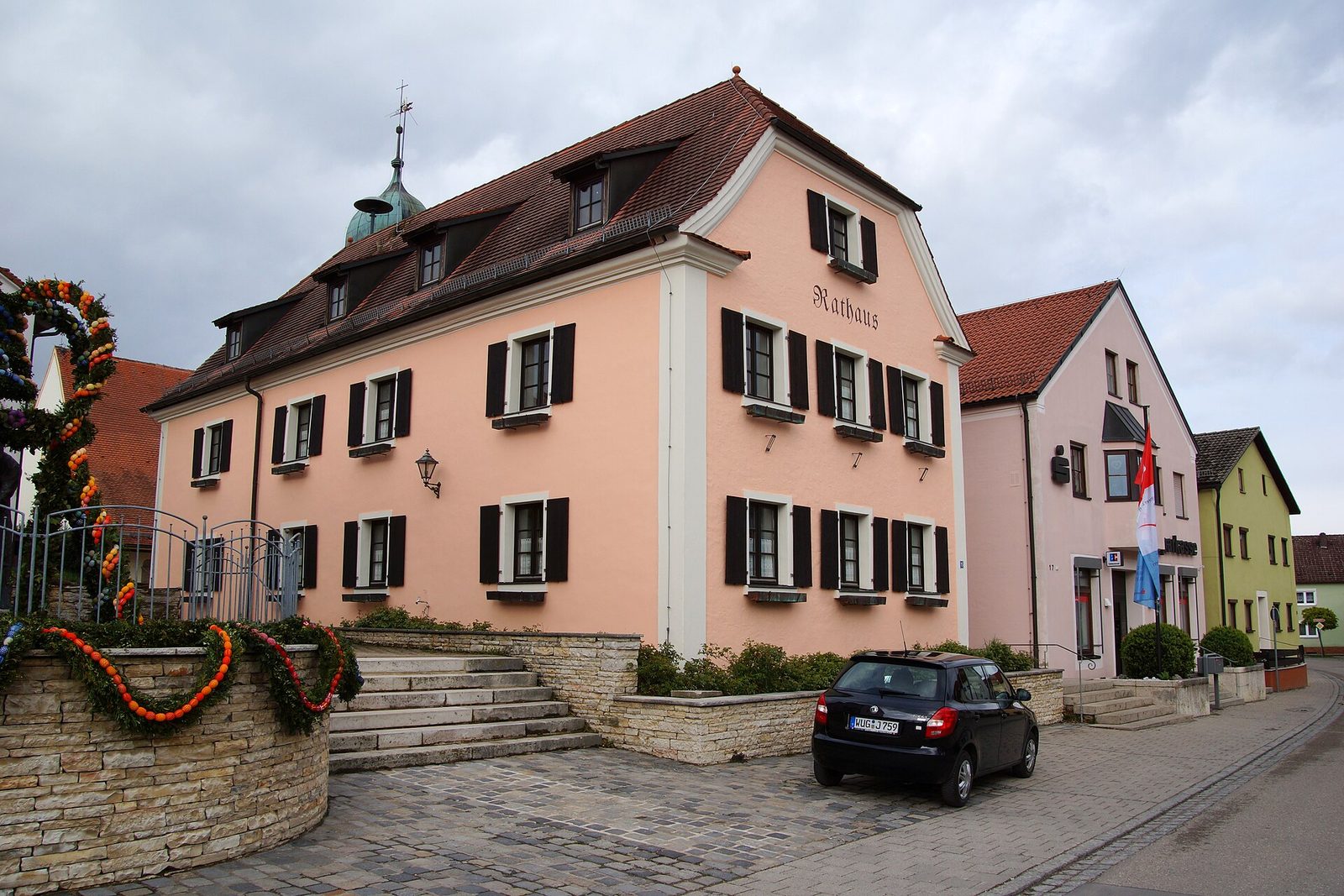
Langenaltheim · DALIBRI, CC BY-SA 4.0
Langenaltheim
Middle Franconia · pop. 2,234 (2020)
- WhereThe southernmost municipality in all of Franconia, on the Weissenburg Alb, about 8 km south of Treuchtlingen.
- SinceFirst written as "Altheim in pago Sualafelden" in the Fulda records, 750-802.
- StoneThe Langenaltheimer Haardt - quarries of Solnhofen limestone, and one of Bavaria's most beautiful geotopes.
- Found hereLondon specimen 1861 · Maxberg 1956 · Munich 1992
5.67 kmon foot over the Haardt
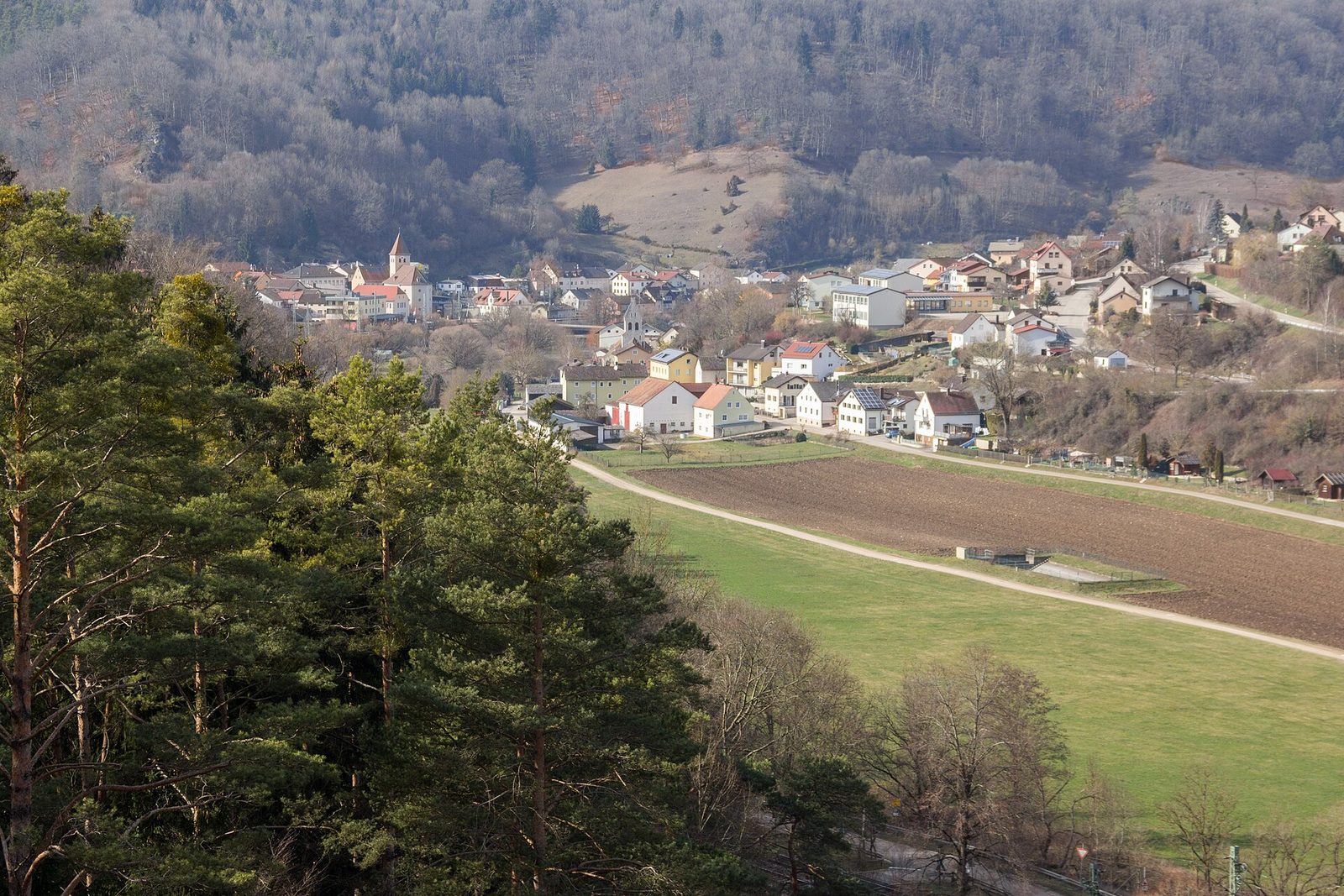
Solnhofen · Derzno, CC BY-SA 3.0
Solnhofen
On the Altmühl · about 1,700 people
- NameSaint Sola founded a church here around 750; "Solaehofinum" (790) became Solenhofen, then Solnhofen.
- PrintAlois Senefelder used Solnhofen stone for lithography, which he invented in 1798 - hence "lithographica".
- MuseumThe Bürgermeister-Müller-Museum, open since 1970, holds two Archaeopteryx specimens.
- Found hereThe first feather, 1860/61 - community quarry, southwest of the village
Bürgermeister-Müller-Museum
Solnhofen
The Solnhofen specimen - the largest known - and the "chicken wing", plus the story of the quarries and of lithography.
Langenaltheimer Haardt
Langenaltheim
The quarry plateau of the London, Maxberg and Munich finds. The former quarry is a protected geotope; working quarries are private - look from the paths.
Jura-Museum
Eichstätt
The Eichstätt specimen, the smallest known. About 17 km east of Langenaltheim.
By train
Solnhofen
About 2 h from Munich, about 70 min from Nuremberg, direct regional trains. Check opening times before you go.
IXField book · the place itself
Feldbuch
Field book
The quarries, the stone and the two villages - then and now. Tap any photo.
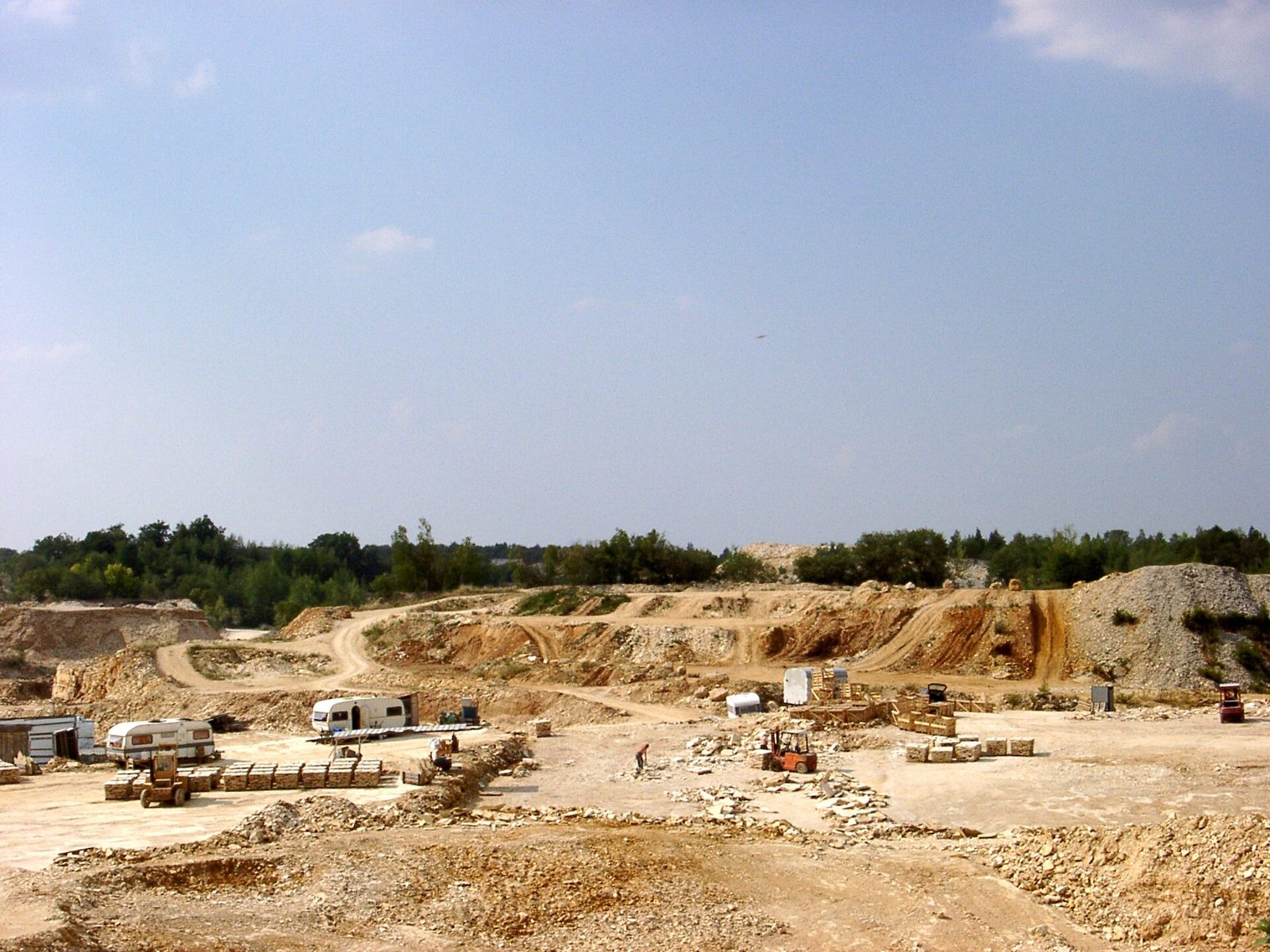
Langenaltheim quarry
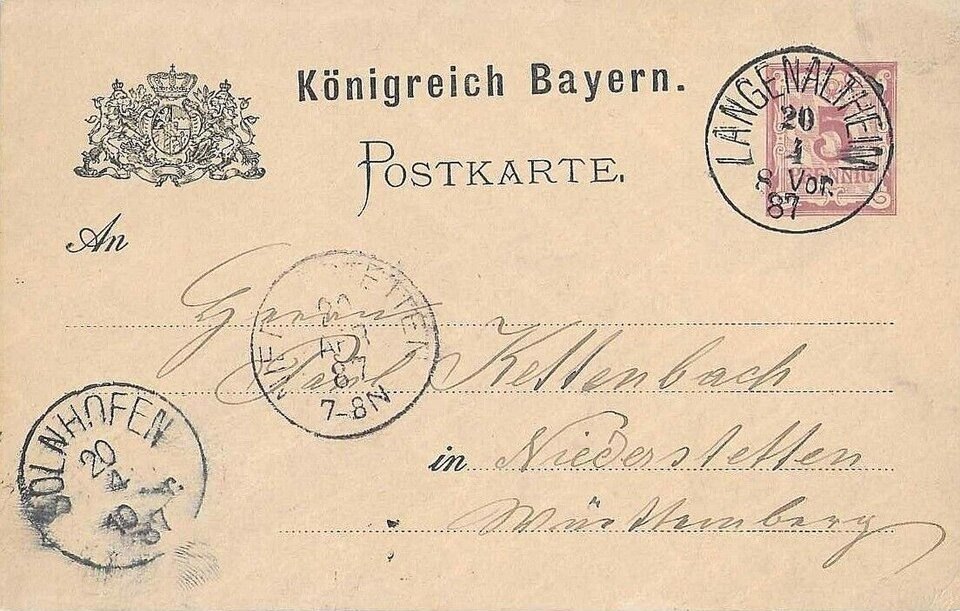
Postcard 1887
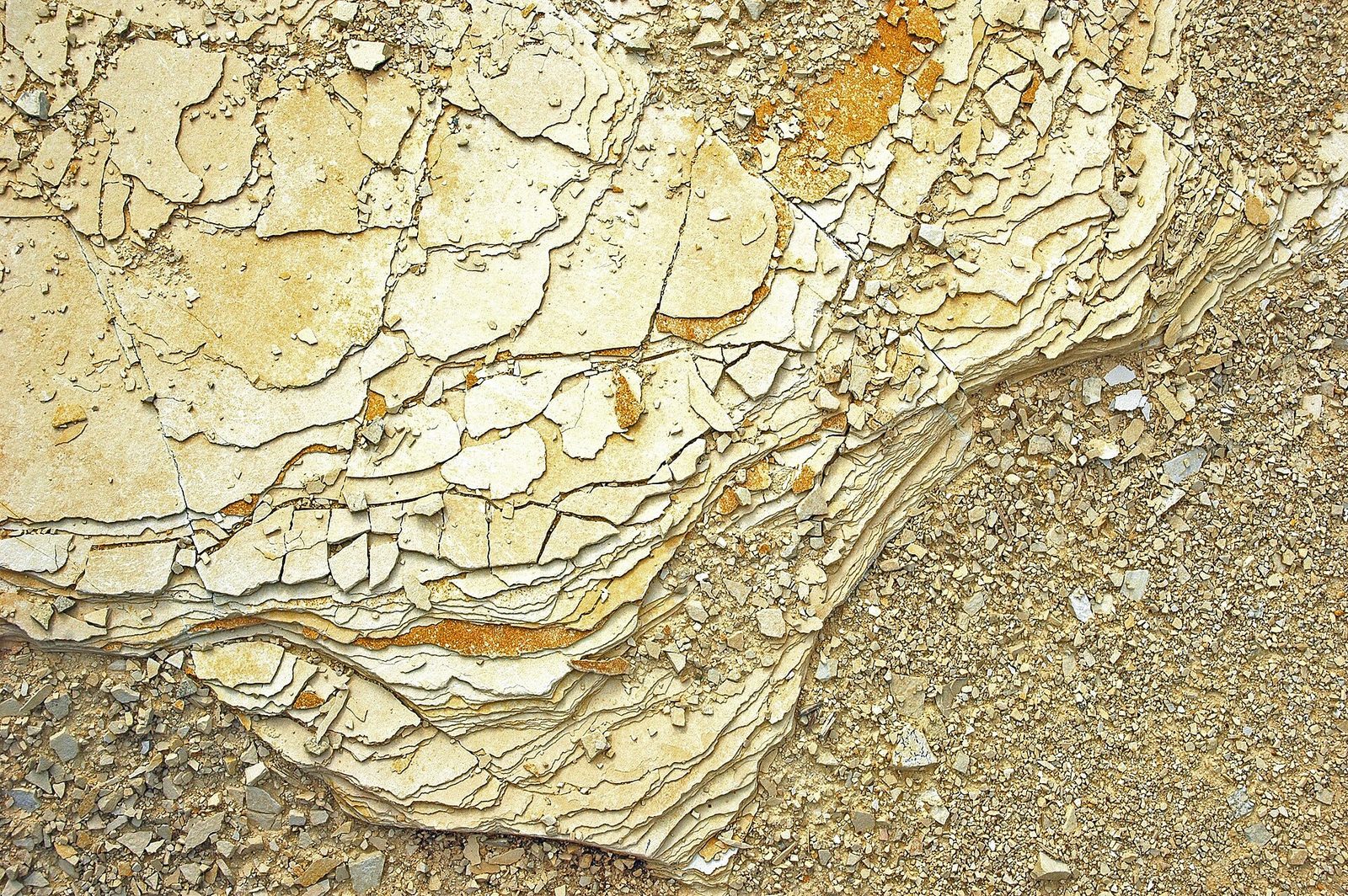
Plattenkalk
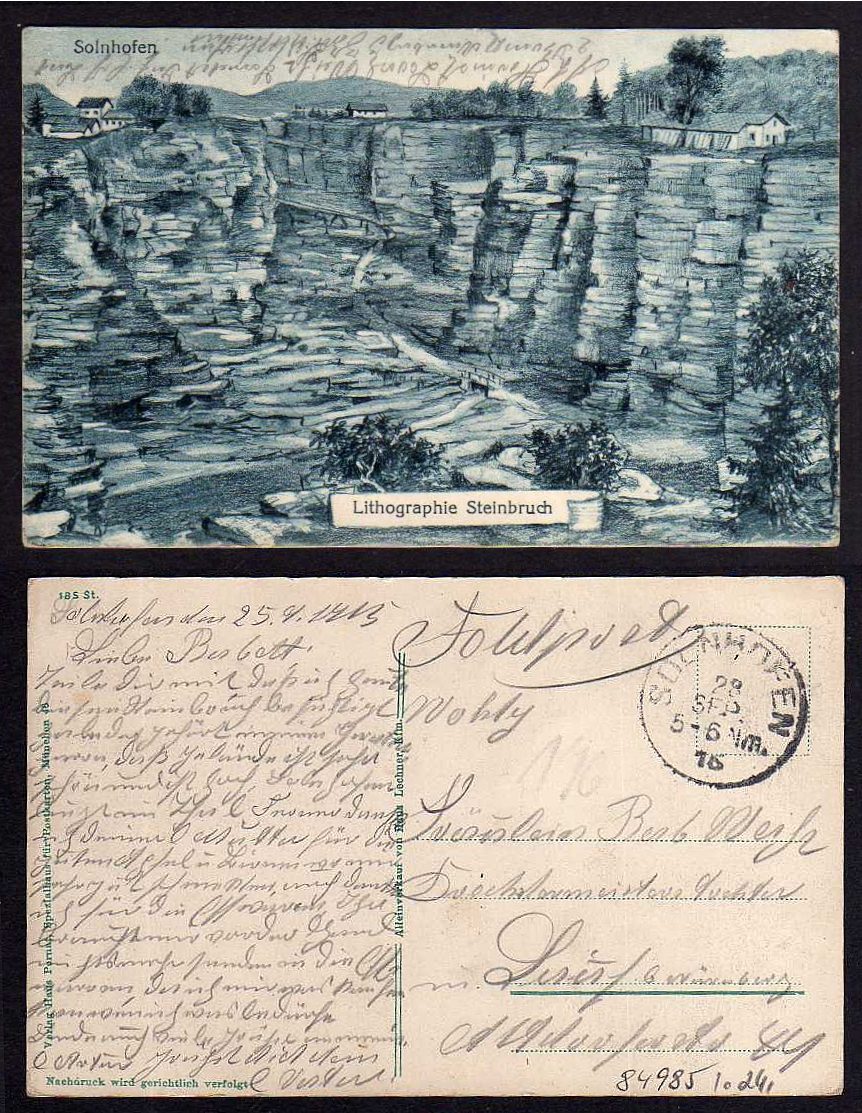
Quarry 1916
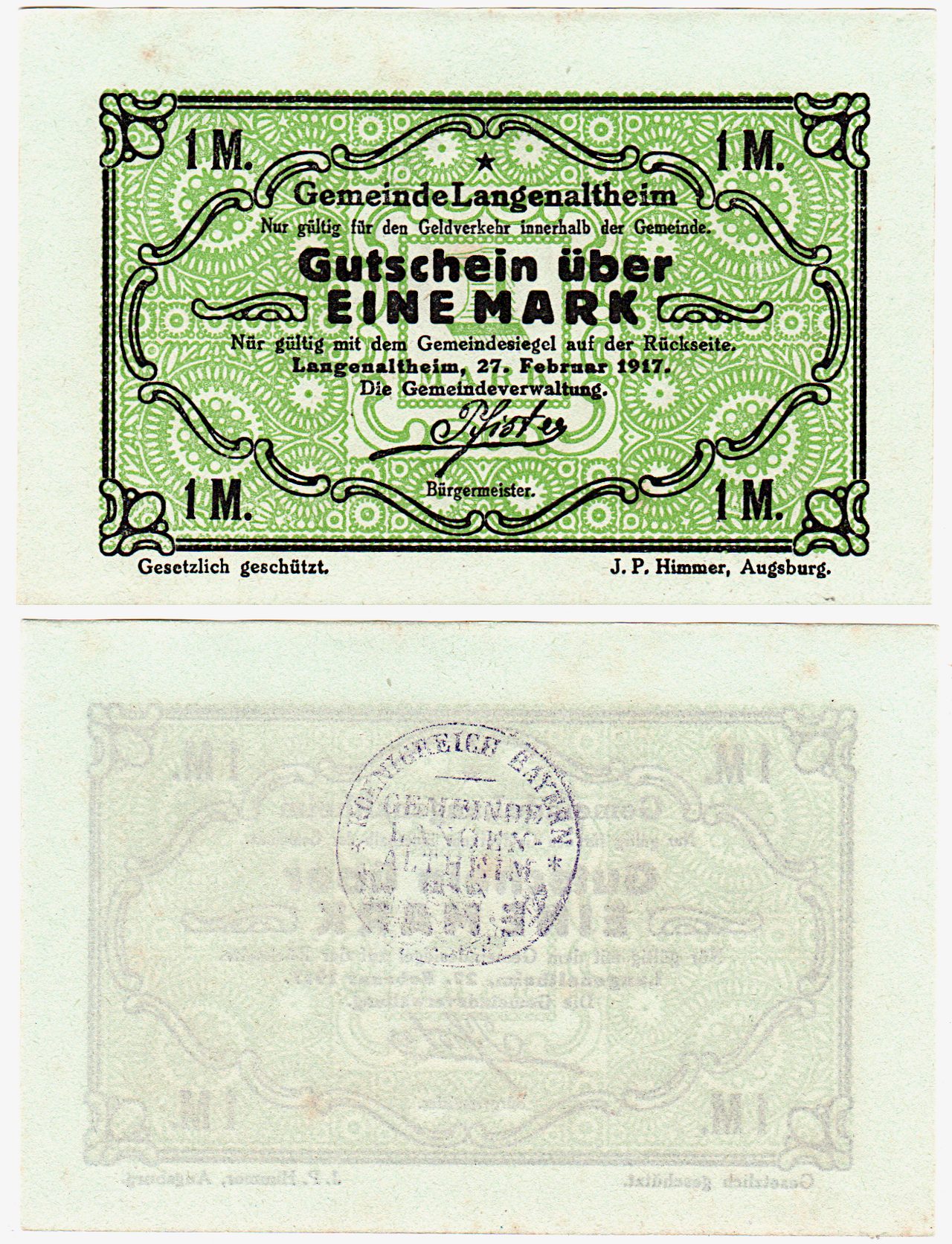
Notgeld 1917
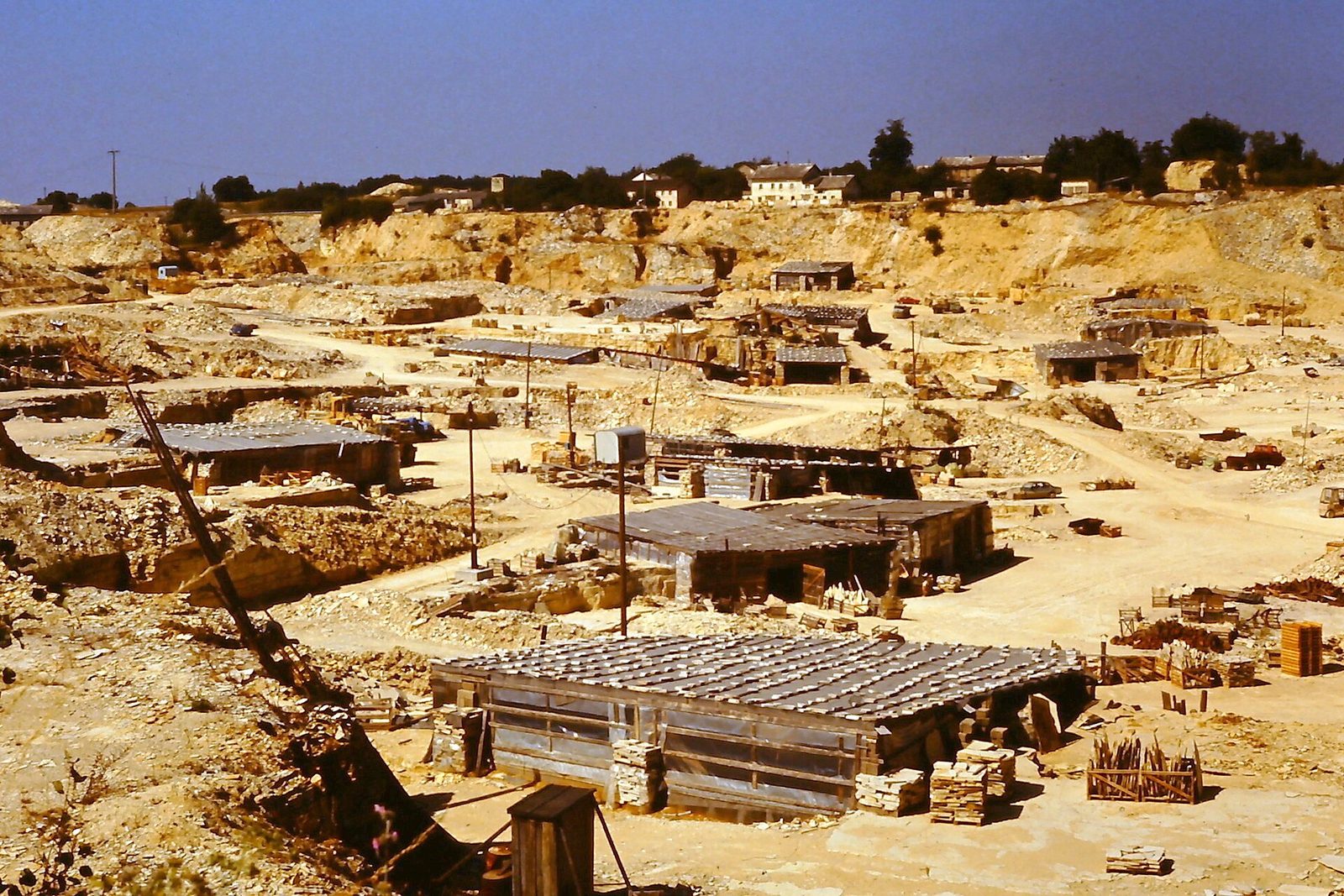
Maxberg quarry
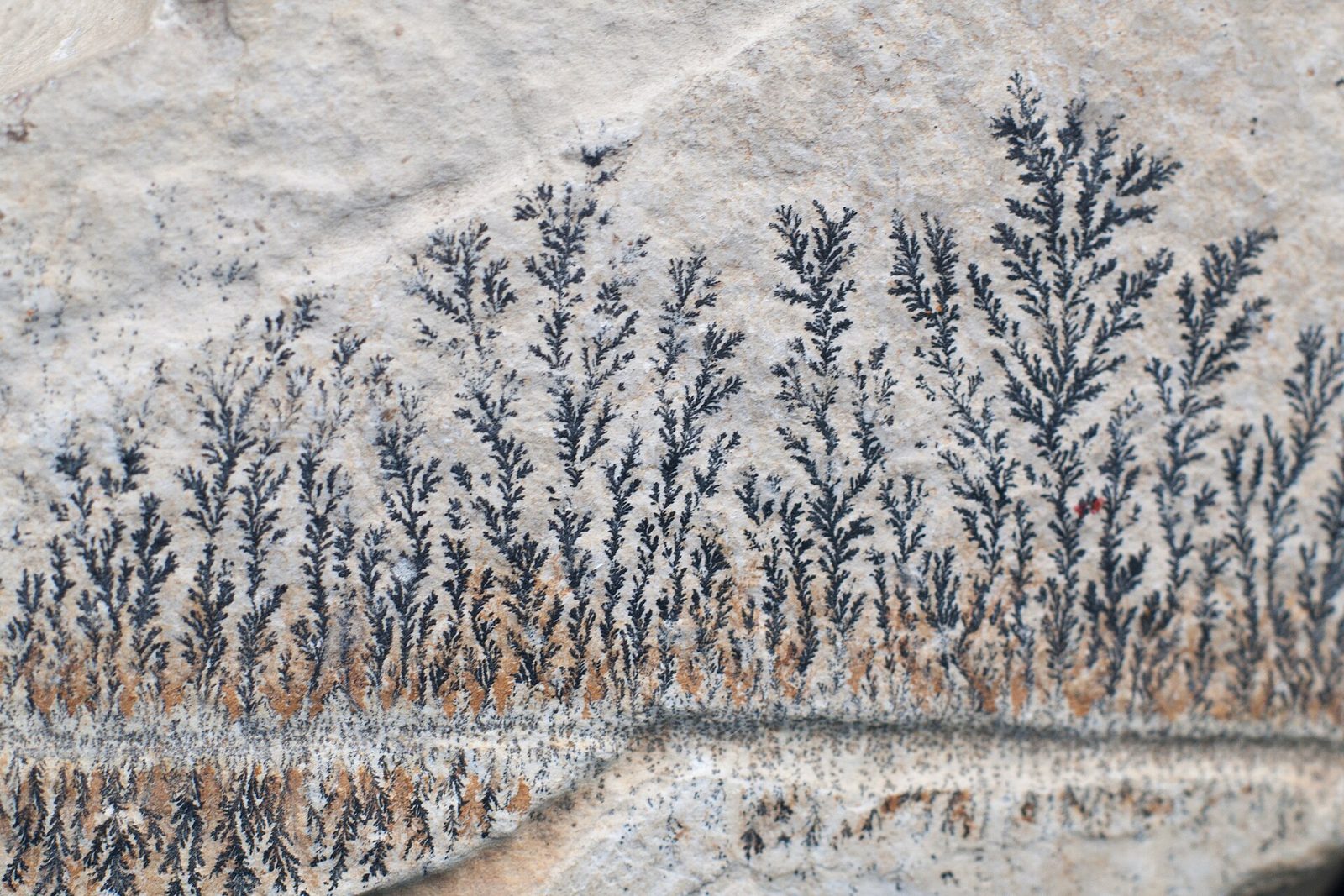
Dendrites
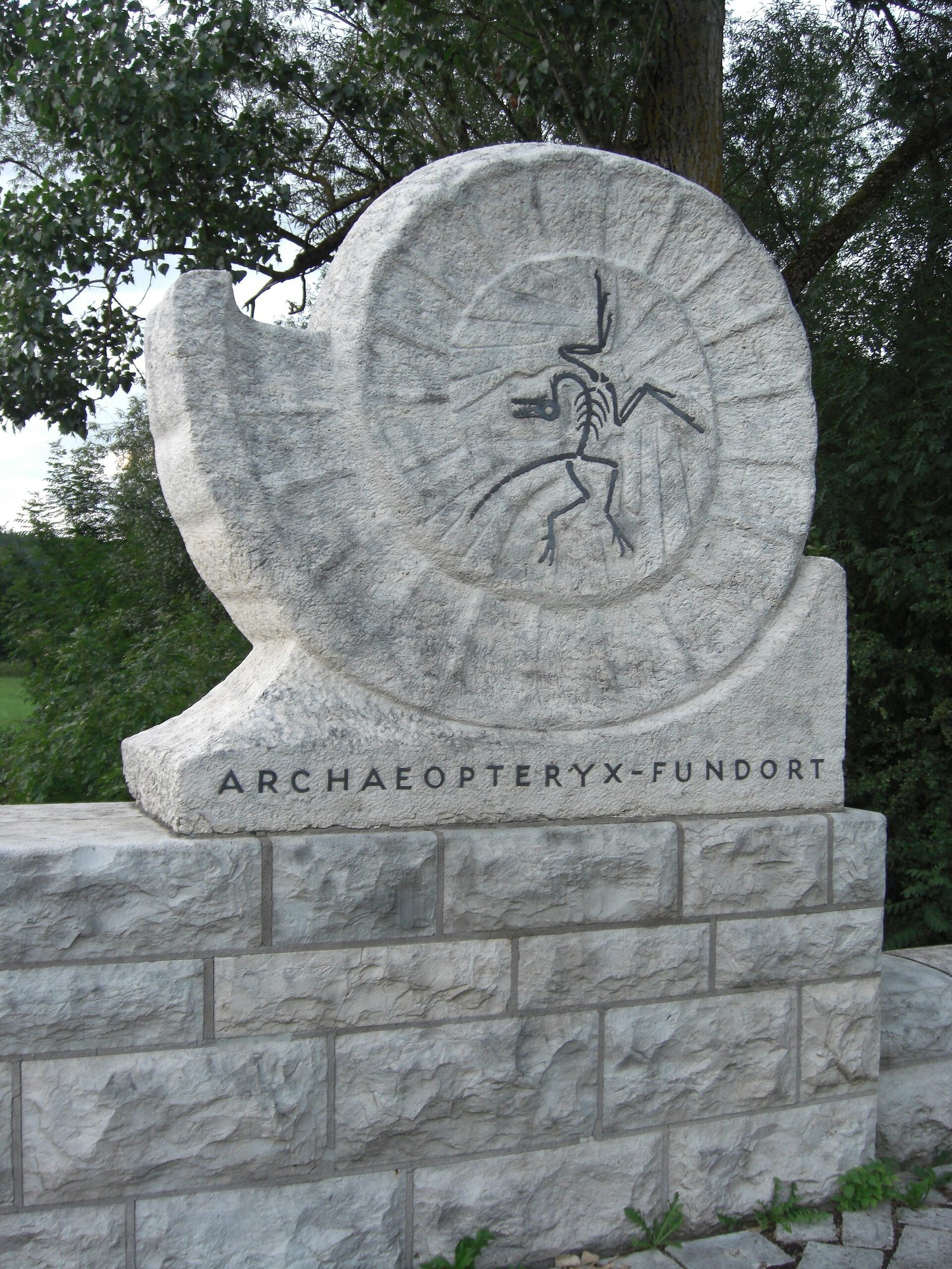
Fundort monument
XTool · where they went
Wohin sie gingen
Where they went
All found within a few kilometres of each other - now spread over two continents. Pick a museum to see how far it is from Langenaltheim.
XIReconstructions, not photographs
Lebensbild
A picture of the living animal
Nobody saw it alive. These are interpretations by artists and museums, from a century apart.
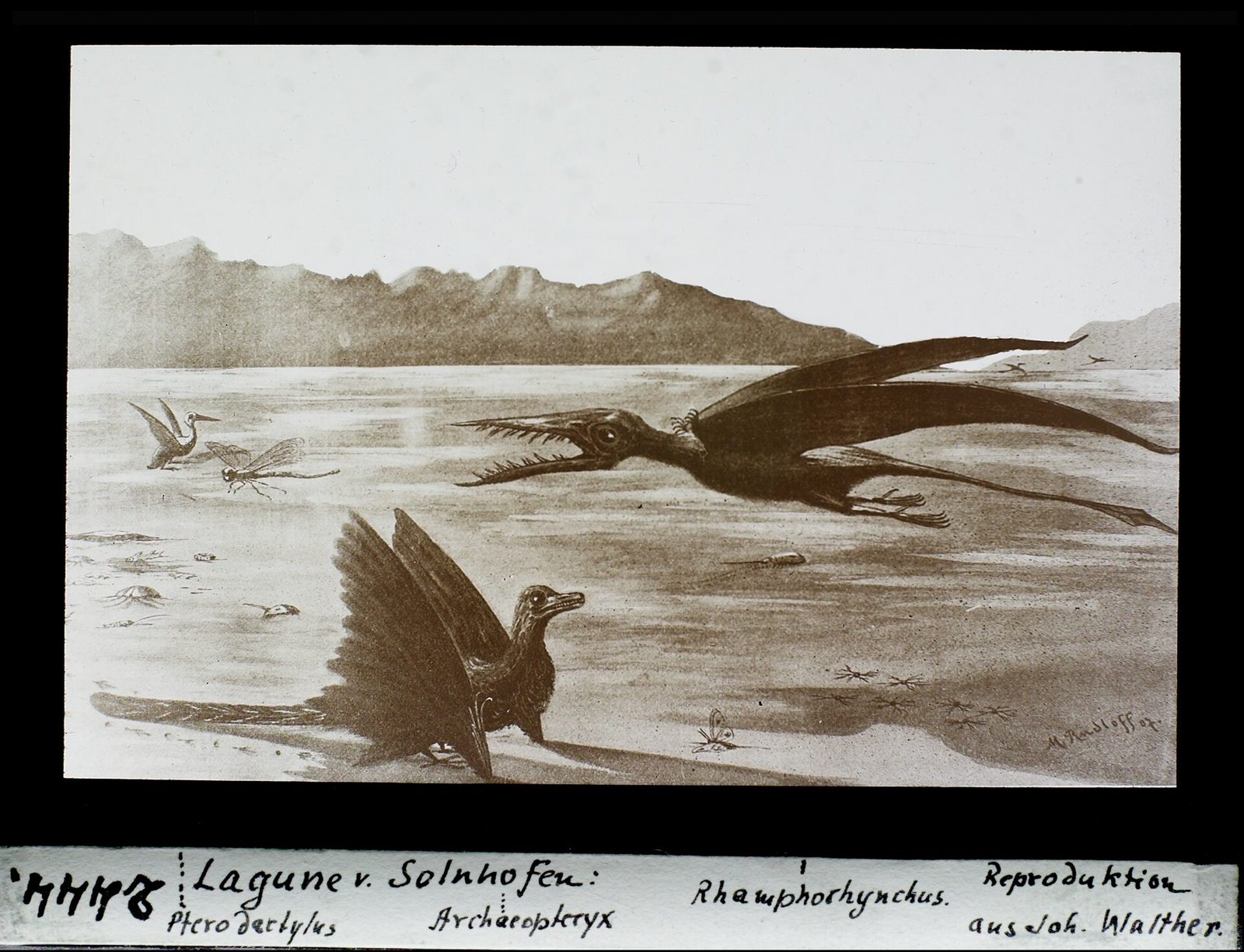
Historic
Lagune von Solnhofen
Leo Wehrli / ETH-Bibliothek, CC BY-SA 4.0
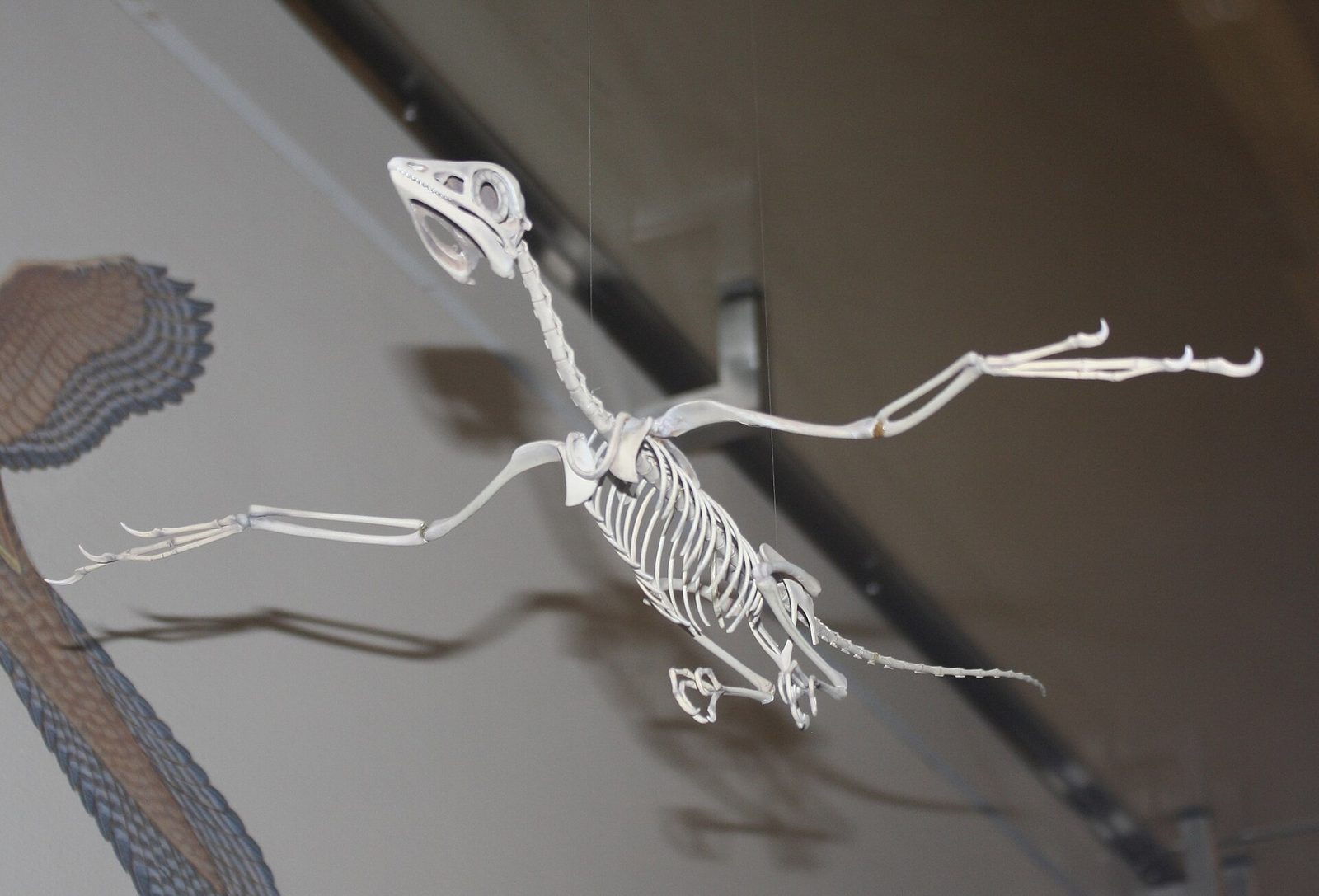
Museum mount
In flight
AMNH, New York · Ryan Schwark, CC0
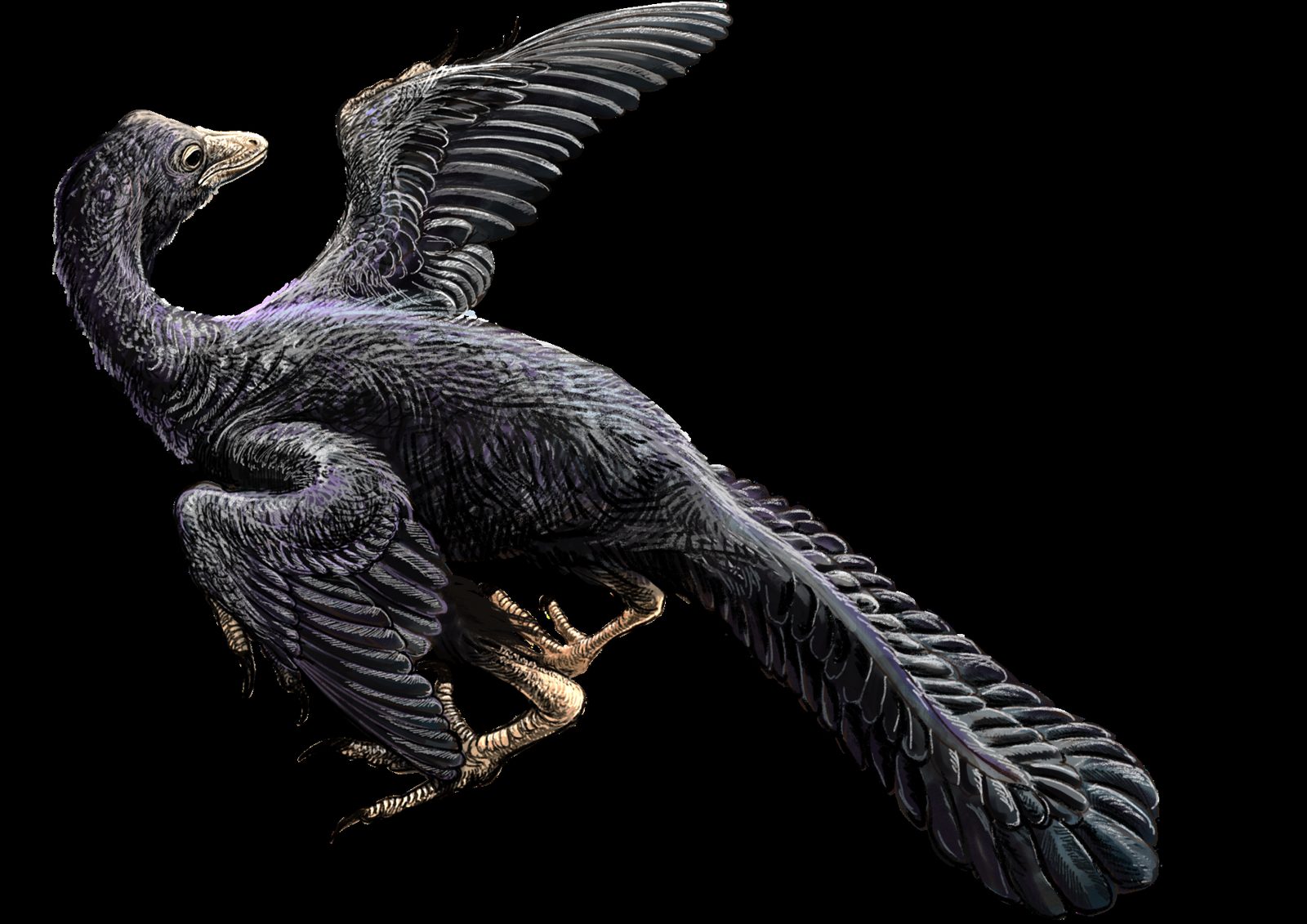
Today
Modern reading
DBCLS, CC BY 4.0
Magpie to raven
Up to 50 cm long, 70 cm wingspan, an estimated 500-1,000 g.
Teeth and claws
Sharp teeth, three clawed fingers, a long bony tail - and real flight feathers. The 2025 Chicago study found the first known tertials.
Matte black
The Solnhofen feather was black - most likely matte. The rest of its colouring is unknown.
Bildnachweis
- berlinreading.jpg - Berlin Archaeopteryx, Emily Willoughby (reading derived for this prototype), CC BY-SA 4.0
- dendrites.jpg - Dendriten auf Kalkstein - Solnhofen Germany (35218393511), Armin S Kowalski, CC BY-SA 2.0
- fundortmonument.jpg - Solnhofen, Evergreen68, CC BY-SA 3.0
- haardtquarry.jpg - 08060045 - Langenaltheim - Steinbruch - 2004, Ingo Rickmann, CC BY-SA 3.0
- lagoon.jpg - ETH-BIB-Lagune von Solnhofen- Pferodertylus, Archaeopteryx, Rhamphorhynchus-Dia 247-02444, Leo Wehrli / ETH-Bibliothek Zurich, CC BY-SA 4.0
- laltchurch.jpg - St Willibald - Langenaltheim 06, DALIBRI, CC BY-SA 3.0
- laltstreet.jpg - Langenaltheim WUG 030, DALIBRI, CC BY-SA 4.0
- maxbergquarry.jpg - Solnhofen - cantera de calizas tableadas, PePeEfe, CC BY-SA 4.0
- notgeld1917.jpg - Langenaltheim - 1Mark 1917, Gemeinde Langenaltheim (1917), scan by 5snake5, Public domain
- plattenkalk.jpg - Solnhofener Plattenkalk - Struktur, Guido Radig, CC BY-SA 4.0
- postcardfront.jpg - PK - Langenaltheim - 1887, Unknown author (1887), Public domain
- reconamnh.jpg - Archaeopteryx in flight at AMNH, Ryan Schwark, CC0
- recondbcls.jpg - 202010 Archaeopteryx lithographica, DataBase Center for Life Science (DBCLS), CC BY 4.0
- solnpostcard1916.jpg - AK - Solnhofen - Lithograpie Steinbruch - 1916, Unknown author (1916), Public domain
- solnview.jpg - Solnhofen 01, Derzno, CC BY-SA 3.0
- spec11.jpg - Archaeopteryx Nummer 11, TheRegalis, CC BY-SA 4.0
- spec12.jpg - Das 12. Exemplar des Archaeopteryx, JensKunstfreund, CC BY-SA 4.0
- specberlin.jpg - Berlin Archaeopteryx, Emily Willoughby, CC BY-SA 4.0
- specchicago.jpg - The Chicago Archaeopteryx, Field Museum, Chicago, CusterDome, CC0
- specchickenwing.jpg - Archaeopteryx (Chicken Wing), H. Raab (User:Vesta), CC BY-SA 3.0
- specdaiting.jpg - Archaeopteryx (Daiting Specimen), H. Raab (User:Vesta), CC BY-SA 3.0
- speceichstatt.jpg - Archaeopteryx lithographica (Eichstätter Specimen), H. Raab (User:Vesta), CC BY-SA 3.0
- specfeather.jpg - ArchaeopteryxTheUrvogelFeather, Notafly, CC BY-SA 3.0
- spechaarlem.jpg - Ostromia Haarlem, MWAK, Public domain
- speclondon.jpg - London Archaeopteryx, Allan Henderson, CC BY 2.0
- specmaxberg.jpg - Archaeopteryx lithographica (Cast of Maxberg Specimen), H. Raab (User:Vesta), CC BY-SA 3.0
- specmunichcase.jpg - Paläontologisches Museum München - Archaeopteryx, High Contrast, CC BY 3.0 de
- specsmnk.jpg - SMNK-PAL-10-000, Wenlongtian, CC0
- specsolnhofen2.jpg - Archaeopteryx in Solnhofener Plattenkalk, Chrisi1964, CC BY-SA 4.0
- specthermopolis.jpg - Thermopolis Archaeopteryx, incidencematrix, CC BY 2.0
All images real and openly licensed, from Wikimedia Commons. Reconstructions are labelled as interpretation. Facts: Wikipedia (EN/DE), October 2026. Map tiles © Esri.